Test records to request with a used electrosurgical generator
A record-review guide for OR procurement and biomedical teams buying a used electrosurgical generator, current as of September 2026. It gives no repair guidance and no standard numbers without citation; clinical safety practice is…
A record-review guide for OR procurement and biomedical teams buying a used electrosurgical generator, current as of September 2026. It gives no repair guidance and no standard numbers without citation; clinical safety practice is covered elsewhere.
“Tested and working” is the most common phrase in used electrosurgical listings and the least informative. It does not say what was tested, against what, by whom, or when. For a generator that will be connected to patients, the difference between that phrase and a test record is the difference between an assertion and evidence.
What “tested” should mean for an ESU
Three distinct activities get collapsed into the word tested. A power-on check confirms the unit starts and responds. A functional check confirms that outputs behave as expected when selected. An electrical safety test measures the properties that protect patients and staff, using calibrated equipment and a defined procedure. Only the last of those produces the evidence an acceptance decision should rest on.
When a seller says a generator was tested, the useful follow-up is the same every time: what test, what procedure, what equipment, what result, what date, and who performed it. A record that answers those six questions is usable. A record that answers none is not.
What to do before the record review
Record review works better when the unit has already been identified. Before reading any paperwork, establish the model, part number and serial from the generator itself, and decide which configuration the clinic intends to run: which modes, which accessory set, and whether the generator will be used as a primary or a backup unit. That context determines which records matter and which are merely present.
It also prevents the most common mistake in used-equipment paperwork review, which is accepting a well-organized pack as evidence of the right unit. A complete file for a similar generator is a different thing from a complete file for this generator, and only the identifier set tells the two apart.
Electrical safety test reports
The safety report is the centrepiece of the pack, and it should be readable by someone who was not present. What to look for:
- The generator’s identity ¡ª model and serial ¡ª tying the report to the unit.
- The test procedure or standard the work followed, named specifically rather than generically.
- The measured values recorded, not only a pass decision.
- The test equipment used and its calibration status.
- The date and the organization or person who performed the work.
A report that states a result without recording the measurements cannot be re-assessed later, which is exactly when a buyer usually wants to re-assess it.
Output verification records
Output verification answers a different question: does the generator deliver what its display says it delivers? Evidence for this usually takes the form of measured output at defined settings, with the acceptable range stated. Where no output verification exists, the buyer is accepting a generator whose performance is assumed, and the assumption will not be tested until the unit is in use ¡ª which is the least convenient moment to discover that the displayed setting and the delivered output have drifted apart.
| Record | What it answers | What to do if it is missing |
|---|---|---|
| Safety test report | Whether the unit meets the applicable safety requirements | Commission the test before the unit enters service; price it in |
| Output verification | Whether delivered output matches the settings | Verify after delivery, or treat the unit as unverified |
| Service and repair history | Whether the unit has known faults or prior work | Price the uncertainty; check whether any work affects calibration |
| Accessory test record | Whether the cables and accessories supplied are functional | Inspect and test before the accessories enter stock |
Accessory and REM-related checks
Generators are sold with accessories, and the accessories carry their own risk. For return-electrode monitoring systems, the relevant question is whether the accessory set supplied is the one the generator is designed to work with, and whether the associated cables and connectors are intact. Record the accessory part numbers with the generator’s file, and test the configuration on the generator before the accessories enter routine use.
Where the accessory set is incomplete, the cost of completing it belongs in the price comparison ¡ª not in a later conversation about who should have supplied it.
Red flags in paperwork
- A certificate without a serial number, so it could belong to any unit.
- Results stated as pass or fail with no measured values.
- Test equipment named without its calibration status.
- A test date that predates work the seller says was performed afterwards.
- Paperwork that describes a different model or configuration from the unit offered.
Acceptance questions for sellers
- Which safety tests were performed, following which procedure, and on what date?
- Can you provide the measured values recorded during those tests?
- What test equipment was used, and was it within its calibration interval?
- Has any repair or component replacement been performed since the last test?
- Which accessories and cables are included, and are they the set the generator is designed for?
- What is the inspection window, and what happens if our acceptance test finds a failure?
Questions buyers ask
Is a service sticker on the generator enough?
No. A sticker records that someone attended the unit; it does not record what was measured, against what procedure, or with what result. Ask for the report behind the sticker.
What if the seller only has an in-house check?
That is a starting point rather than evidence. Treat the unit as requiring a documented safety test before it enters service, and make the purchase conditional on the result.
Does the age of the test matter?
Yes. A safety test records the condition of the unit on the day it was performed. The older it is, the more the result describes history rather than current state, and the more a buyer should expect to repeat it.
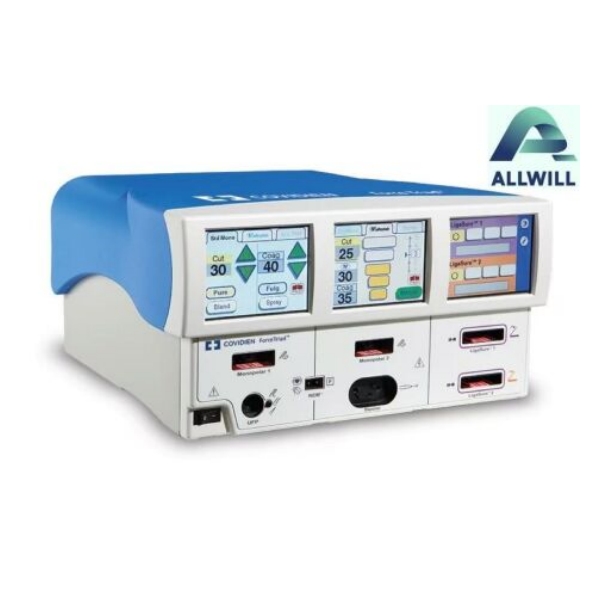
Ask for measurements, not assurances, and make acceptance conditional on the result you need. If you are sourcing a generator and want the records that travel with it, ask HHG for the documentation on a specific unit, or review the current ForceTriad listing. Related reading: electrosurgical generator safety and leakage protection.