What Are the Best High-Tech Medical Instruments for Modern Healthcare in 2025?
A Teleflex intra-aortic balloon pump at $72,897 and an Intuitive enhanced vision probe at $3,646 are both described as high-tech medical instruments, and the only comparison that holds up is the one that ignores…

A Teleflex intra-aortic balloon pump at $72,897 and an Intuitive enhanced vision probe at $3,646 are both described as high-tech medical instruments, and the only comparison that holds up is the one that ignores the label. What separates them is what their paperwork proves and what each instrument has to earn before it justifies the capital.
Last updated:
What makes an instrument high-tech in a regulatory sense
The word is marketing. In the file, an instrument is defined by its class and by the evidence that exists for the model. The FDA’s guidance on classifying a device sets out three tiers: Class I under general controls, Class II under general controls plus special controls, and Class III, which requires premarket approval rather than clearance.
That is the useful distinction when comparing a monitor to a surgical robot. A Class III instrument arrives with a PMA and a heavier support obligation; a Class II instrument arrives with a 510(k) and special controls specific to its type. Both can be “advanced”. Only one of them will cost more to own than to buy.
Buying new against certified pre-owned on real listings
Pre-owned is a trade-off between capital cost and remaining service life, and the arithmetic is only visible when the specification is named. The listings below are live on the marketplace today.
| Instrument | Listed price | What the buyer is really choosing |
|---|---|---|
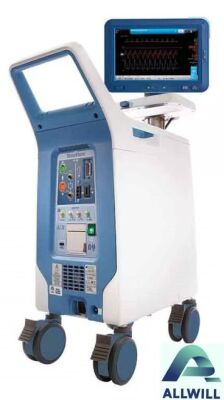
| Teleflex IAP-0700 intra-aortic balloon pump | $72,897 | Highest capital line in the catalogue; the case rests on utilisation and on consumable supply, not on the pump alone |
| Boston Scientific RF3000 radiofrequency ablation system | $42,625 | Procedure-specific capital; depends on a steady referral volume |
| Medtronic TruClear control unit | $10,782 | Mid-range capital with a single clear indication |
| Intuitive enhanced vision probe | $3,646 | Accessory-class spend that is only economic alongside the parent system |
Two of those rows make the point. The balloon pump is a platform whose recurring cost sits in the catheters rather than in the console, so a used console is only a saving if consumable supply is secured at the same time. The vision probe is the opposite: a low-cost component that is worthless without the system it plugs into, and buying it first is a common and avoidable mistake.
The evidence pack that decides the price
Three public records do most of the work, and all three are free. The model’s 510(k) or PMA is searchable in Devices@FDA, part of the FDA’s medical device databases. The UDI resolves to a registered device through AccessGUDID. And the recalls and early alerts list says whether the model or lot has an open corrective action.
What those records cannot tell you is whether this particular unit has been cared for, and that is where a seller’s own file matters: service events with the specification applied, the date of the last calibration, the installed software revision, and whether any part replaced during its life changed the device’s performance or safety characteristics. That last question is the boundary between a maintained instrument and a remanufactured one under the FDA’s May 2024 guidance, and the answer changes who is responsible for the device.
A costing model for a capital purchase
A model, not a forecast. The prices are live listings; the rates are assumptions to substitute.
Take the Medtronic TruClear control unit at $10,782. Assume freight and insurance at 7%, commissioning at $400, a service contract at 11% per year, and one disposables kit per procedure at an average of $350 with 120 procedures a year.
Year one: $10,782 + $755 + $400 + $1,186 + $42,000 = roughly $55,123. The console is 20% of that. Over five years, assuming flat procedure volume, the console falls to about 4% of the total and the disposables line grows to roughly $210,000.
Now do it for the balloon pump at $72,897 with the same assumptions. The console is the largest single line, but if a catheter set costs materially more than the ablation kit the disposables overtake it inside three years. The question to answer before purchase is therefore not “is the console a good price” but “what does one procedure cost, and who controls that price”.
Where these instruments fail after purchase
The failures that turn up in service records are rarely exotic. Accessories that are discontinued while the console is still supported; software that needs a service laptop and a paid licence to update; a transducer or probe with a finite number of sterilisation cycles; and consumable pricing that is locked to a single supplier once the console is installed. Each one is visible before purchase if the questions are asked, and invisible afterwards.
The buyer’s job is to convert all of that into one number per procedure, then compare that number with the reimbursement or revenue the procedure actually generates. An instrument that is technically the best in its class and economically negative is still the wrong purchase.
Where the boundary sits between upgrading and replacing
Upgrading the software, replacing a probe or a transducer, and exchanging the console are three different events with three different costs, and the right one is decided by what has actually failed. If the installed revision is current and the accessories are in their rated life, the constraint is usually throughput rather than capability, and a second unit is cheaper than a replacement. If the revision can no longer be updated or the accessory has been discontinued while the console is still supported, the instrument is on a countdown and the replacement decision should be made while parts are still available. The point at which a device becomes unsupportable is not announced; it is inferred from the update path, the consumable supply and the service response times, all three of which can be asked about before purchase rather than after.
References
- FDA: Classify Your Medical Device — Class I, II and III and the controls each carries.
- FDA: Medical Device Databases — Devices@FDA (510(k) and PMA) and registration and listing.
- FDA: Unique Device Identification System (UDI System) and AccessGUDID.
- FDA: Remanufacturing of Medical Devices — May 2024.
- FDA: Medical Device Recalls and Early Alerts.
FAQ
What are the best high-tech medical instruments for a hospital in 2025?
The ones whose evidence, consumables and service route are all settled before purchase. Class, premarket record and recall status are public and take ten minutes to check; consumable pricing and service rates are commercial terms and should be quoted in writing.
Is certified pre-owned equipment suitable for critical care?
Yes, when the records name the specification each service procedure was performed against and no replacement part changed the device’s performance or safety characteristics. Without those two answers the buyer is pricing an unknown.
How do we compare two instruments with different prices?
Convert both to cost per procedure, including freight, commissioning, the annual service rate and the consumables each procedure consumes. On the figures modelled above, a cheaper console can cost more per procedure once the kit price is included.
What software question should be asked before buying?
Whether the installed revision is the current one, what the update requires, and whether it is chargeable. A device that needs a licensed service laptop to reach the current firmware has a hidden recurring cost that does not appear on the listing.
Where can the premarket record be checked?
Devices@FDA searches 510(k) premarket notifications and PMA approvals, and is part of the FDA’s medical device databases collection. The model number on the listing is enough to run the search.
Price the procedure, not the console. Current listings name the model, the accessories included and the asking price, which is what a cost-per-procedure model needs.
Part of the Regional Markets & Trade guide.