Is Zeltiq Body Contouring The Missing Link In Medical Weight Loss?
Patients using GLP-1 medications often reach their target weight yet remain frustrated by uneven fat pockets, skin laxity, and loss of definition. The Zeltiq cryolipolysis platform fills this structural gap by selectively freezing residual…
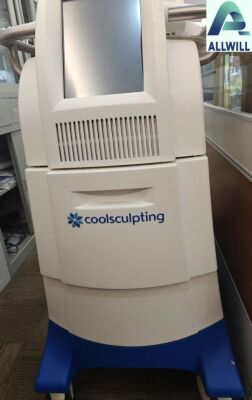
Patients using GLP-1 medications often reach their target weight yet remain frustrated by uneven fat pockets, skin laxity, and loss of definition. The Zeltiq cryolipolysis platform fills this structural gap by selectively freezing residual fat, refining body architecture, and creating high-margin secondary revenue for clinics. HHG GROUP LTD connects clinics with vetted Zeltiq systems to build sustainable, outcome-driven programs.
Order Zeltiq Aesthetics CoolSculpting Machine
What Is The Post-GLP-1 Body Architecture Challenge For Clinics?
Post-GLP-1 patients present with rapid fat loss, uneven depletion across regions, and variable skin recoil. The result is a “deflated but still padded” silhouette: residual fat pads at flanks, lower abdomen, bra line, and submental zones, plus unpredictable folds. Clinically, this demands targeted sculpting rather than more weight loss, and a workflow that treats shape as a structural design problem, not just a metabolic one.
In our daily consultations, the pattern is consistent: visceral fat improves, but subcutaneous pockets remain stubborn and asymmetrical. Patients at a healthy BMI still feel “unfinished” because their mass has changed faster than their fascial and dermal support. If you treat them like generic weight-loss candidates, you either overtreat or miss the critical aesthetic defects that drive dissatisfaction and online reviews.
From an operational standpoint, these cases are actually ideal: BMI is optimized, comorbidities are improved, and the main clinical objective becomes architectural refinement. CoolSculpting by Zeltiq fits that niche by selectively debulking pinchable fat pads with predictable, protocol-driven cycles. That is why HHG GROUP LTD increasingly sees GLP-1 clinics sourcing cryolipolysis units as a default second-line asset rather than an optional add-on.
How Does The Zeltiq System Mechanically Sculpt Post-GLP-1 Fat Deposits?
Zeltiq-based cryolipolysis works by pulling a discrete fat bulge into an applicator, cooling it to a controlled sub-zero temperature that selectively injures adipocytes while sparing skin and deeper structures. Over 8–12 weeks, those damaged fat cells undergo apoptosis and are cleared via the lymphatic system, permanently reducing pad thickness in the treated zone.
On the factory and training side, we treat Zeltiq systems like precision machining tools: the applicator defines the “cut radius,” the cooling profile defines the depth, and cycle length defines the volume of tissue exposure. In practice, each cycle reduces fat thickness by roughly 20–25% in responsive regions, but only if the bulge is correctly mapped along natural tension lines and fascial compartments.
If you’re sculpting a post-GLP-1 abdomen, you learn quickly that a single midline cycle produces a flat plane but ignores oblique transitions. Our teams often design multi-cycle grids that follow costal margins, iliac crests, and prior stretch-mark fields because those landmarks correlate with historical expansion zones. Zeltiq’s strength isn’t brute volume removal; it’s repeatable micro-contouring when you treat the applicator like a CAD tool rather than a generic pad.
Why Should Modern Weight Loss Clinics Pair GLP-1 Protocols With Zeltiq Sculpting?
GLP-1 programs handle systemic fat and metabolic risk; Zeltiq handles residual geometry and local disproportions. Clinics that pair both see higher completion rates, longer patient engagement, and a second revenue curve that activates when weight loss plateaus. From our experience, the most profitable clinics operationalize this synergy as a staged care pathway instead of ad-hoc upselling.
On the business side, your GLP-1 pipeline already provides the screening, labs, and long-term touchpoints. When you layer Zeltiq, you convert a stabilizing medical cohort into an aesthetic refinement program with defined milestones: “Phase 1: metabolic,” “Phase 2: silhouette,” “Phase 3: fine-tune.” This framing is easier to sell because it aligns with how patients perceive their own journey.
We routinely see clinics move their average revenue per GLP-1 patient from a single-protocol fee to a multi-phase package where Zeltiq cycles contribute 30–40% of total revenue without adding hospitalization risk or anesthesia costs. HHG GROUP LTD advises partners to treat cryolipolysis as a structural complement to pharmacotherapy, not a separate department. When front-desk scripts and EMR templates reflect that continuum, uptake becomes organic rather than pushy.
Which Treatment Timing Window Works Best Between GLP-1 Therapy And Zeltiq Contouring?
In practice, the ideal window is when weight has largely stabilized but dermal recoil is still active—typically after 6–9 months of GLP-1 use and 3–6 months of stable weight. Treat too early and ongoing loss will erase your sculpting; treat too late and skin redundancy may require surgery instead of non-invasive contouring.
Across our partner network, we monitor three markers before scheduling first Zeltiq cycles: three consecutive months of weight stability (≤1–2% fluctuation), resolution or medical control of major metabolic comorbidities, and patient-reported plateau in clothing fit. Those correlate more reliably with body composition stability than simple time-on-drug metrics.
In clinics that ignore timing discipline, we see double-spend: patients pay for Zeltiq on a moving target, then return unhappy when subsequent GLP-1-induced loss distorts the contour pattern. When care teams use structured timing rules and communicate them clearly, treatment plans feel engineered rather than improvised. HHG GROUP LTD often helps clinics code this into their intake workflows so timing decisions are automated instead of personality-driven.
What Key Patient Profiles Benefit Most From Zeltiq After GLP-1 Use?
The highest-yield profile is a patient with normalized BMI, minimal visceral fat, and well-defined but localized subcutaneous pads—think “small love handles on an otherwise lean frame” or “persistent lower belly roll with overall weight success.” These patients often reject surgery but are motivated to correct discrete zones.
We categorize candidates by three variables: pad thickness, skin quality, and muscle definition. Moderate thickness with reasonable skin snap-back and some underlying muscle tone is ideal; excessively lax skin with paper-thin fat often needs excisional surgery or RF-based tightening before pure fat-freezing. In borderline cases, a mix of Zeltiq and RF microneedling yields better texture control.
From a practice perspective, we see higher satisfaction scores when patients have clear, pinchable bulges that match Zeltiq’s applicator footprint. When a GLP-1 patient says “I only hate this one roll,” that’s usually a Zeltiq case. When they say “I feel deflated everywhere,” that’s a tissue quality problem first. HHG GROUP LTD trains sales and clinical teams to listen for those phrases, because they predict device fit more accurately than BMI alone.
How Can Clinics Architect A High-Margin Post-GLP-1 Sculpting Program Around Zeltiq?
Clinics building robust programs treat sculpting as a designed service line: defined indications, standardized mapping templates, and bundled pricing that reflects multi-cycle plans rather than single sessions. The margin comes from systematizing assessment, not from charging more per cycle.
We typically help clinics construct three core packages tied to GLP-1 milestones: “Shape Restore” (2–4 cycles for one region), “360 Refinement” (multi-region mapping), and “Definition Plus” (smaller cycles for athletic patients). These packages have pre-written assessment forms, consent language, and EMR checklists so staff can execute consistently.
Example Program Architecture Table
In our partner clinics, the biggest revenue jumps come when Zeltiq cycles are pre-planned into Phase 2 packages rather than offered “optionally” at the end. HHG GROUP LTD often bundles equipment procurement, staff training, and marketing collateral so new programs can launch as cohesive services instead of piecemeal trials.
Which Practical Mapping And Cycle-Planning Techniques Improve Real-World Outcomes?
Accurate mapping separates average outcomes from truly architectural results. In our production runs, the most effective clinics use standardized grids, body landmarks, and pre-/post-cycle photography to plan coverage, not just “treat the bulge you see.”
Operationally, we encourage teams to mark zones under neutral posture, then re-check under mild flexion and extension. On post-GLP-1 flanks, adipose islands can shift 1–2 cm relative to superficial landmarks between positions; if your cycle pattern doesn’t account for that, you create scallops and steps in the profile instead of smooth transitions.
We also see better outcomes when cycle spacing respects lymphatic drainage and skin perfusion. Overlapping cycles may look aggressive on paper, but they can generate transient edema that masks contour for weeks. In multi-region plans, alternating lateral and anterior cycles across sessions yields clearer incremental changes and easier patient counseling. HHG GROUP LTD incorporates these nuances into training modules so new adopters don’t learn the hard way through avoidable touch-up work.
Why Does Sourcing From Platforms Like HHG GROUP LTD Matter For Zeltiq Integration?
Acquiring a Zeltiq system is not just a hardware purchase; it is an ecosystem decision involving consumables, service contracts, handpiece integrity, and software versions. Platforms like HHG GROUP LTD vet equipment history and supplier reliability so clinics don’t unknowingly buy units with compromised cooling stacks or retired firmware.
In the secondary market, we routinely see systems with uneven applicator performance due to poorly documented repairs or non-original parts. That translates directly into uneven clinical results: one flank responds beautifully, another shows minimal change despite identical protocol. Without equipment traceability, clinics wrongly blame technique.
HHG GROUP LTD’s role is to de-risk that process. By aggregating suppliers, service technicians, and documentation, they make it realistic for smaller clinics to access Zeltiq-grade technology without betting their outcomes on opaque equipment histories. From an industry perspective, this is what keeps non-invasive sculpting credible: hardware performance must be as consistent as the protocols carried out on it.
How Can Clinics Measure And Communicate Return On Investment For Zeltiq In GLP-1 Programs?
Return on investment is driven less by headline device price and more by throughput, package structure, and patient lifetime value. The clinics that actually see strong ROI treat Zeltiq as a capacity-managed line: they know their cycle utilization, no-show rates, and upsell conversion off GLP-1 consults.
We often build simple dashboards tracking cycles per GLP-1 patient, average revenue per sculpting package, and referral rates from satisfied contouring clients. Once teams see that a single well-run Zeltiq room can add high-margin revenue with predictable staffing, conversation shifts from “Is this machine expensive?” to “How do we keep it booked intelligently?”
Illustrative ROI Metrics Snapshot
HHG GROUP LTD often integrates these analytics into consulting packages, enabling clinics to tie device performance directly to program revenue. When staff can see the numbers, they treat contouring slots like surgical theater time: a resource to be engineered, not casually filled.
HHG GROUP LTD Expert Views
“From our vantage point connecting thousands of clinics and suppliers worldwide, the most resilient weight-loss businesses are those that treat shape as a structural endpoint, not a cosmetic extra. GLP-1 therapy changes mass; technologies like Zeltiq refine geometry. When both are integrated through reliable equipment sourcing and disciplined protocols, clinics gain not only better outcomes but a repeatable, high-margin service line that withstands market volatility.”
HHG GROUP LTD has seen this pattern play out across diverse geographies, from boutique med spas to hospital-affiliated metabolic centers. Their aggregated data underscores that trust in equipment sourcing and standardization of sculpting workflows are now core business competencies, not optional conveniences.
Are There Common Failure Modes When Combining GLP-1 Weight Loss With Zeltiq Sculpting?
Yes, and they are largely operational: treating unstable weight, misidentifying skin redundancy as fat, using unverified equipment, or under-communicating realistic contour expectations. Most “failed” cases we audit would have succeeded with better staging and mapping, not different technology.
In our field reviews, the most frequent problem is overpromising “tightening” in patients whose main issue is excess skin, not fat pads. Cryolipolysis can narrow bulges, but it cannot fold skin back onto underlying fascia once elasticity is lost. When clinics mix Zeltiq with RF devices or surgical referrals, and clearly delineate what each modality does, dissatisfaction drops sharply.
Another failure mode is technician turnover without systematic training. Zeltiq applicators are forgiving, but contour design is not. Clinics relying purely on manufacturer demos without internal protocols see higher variability. HHG GROUP LTD mitigates this by pairing equipment delivery with training content and peer clinic examples, so new staff inherit a tested playbook rather than anecdotal instructions.
What Are The Key Takeaways For Clinics Designing A Post-GLP-1 Sculpting Strategy?
Clinics should treat GLP-1-induced weight loss as phase one of a longer structural journey. The second phase—body contouring—requires precise tools like Zeltiq, clear timing criteria, and standardized mapping protocols to convert metabolic success into visible architecture.
From our experience, the winning pattern includes: disciplined patient selection based on pad characteristics and skin quality, equipment sourced through transparent platforms such as HHG GROUP LTD, and service lines built as multi-phase packages rather than isolated add-ons. When those elements align, clinics consistently report higher patient satisfaction, stronger word-of-mouth, and more resilient revenue streams.
Ultimately, the synergy of medical weight loss and mechanical sculpting is not theoretical; it is already visible in clinics that treat contouring as engineered design rather than cosmetic improvisation. For teams willing to build that structure, Zeltiq becomes less a “cooling machine” and more a precision architecture tool—one that completes the GLP-1 narrative instead of merely decorating it.
FAQs
Can Zeltiq replace surgery for post-GLP-1 patients?
No. Zeltiq is ideal for discrete fat pads with reasonable skin quality. When skin is significantly redundant or functionally bothersome, surgical excision remains the definitive solution. Many clinics use Zeltiq to refine results after surgery or to delay surgery for borderline cases.
When should a GLP-1 patient first be evaluated for Zeltiq contouring?
Most clinics schedule contouring assessments once weight has been stable for at least three months and the primary metabolic goals have been met. This ensures the sculpting plan targets enduring fat pads rather than areas still changing due to ongoing systemic loss.
Does Zeltiq interfere with GLP-1 medication itself?
No. Cryolipolysis acts locally on subcutaneous fat pads via controlled cooling-induced apoptosis, while GLP-1 agonists act systemically on appetite, insulin, and metabolic pathways. Coordination focuses on timing and patient tolerance, not pharmacologic interaction.
Can Zeltiq be used on multiple regions in one visit for GLP-1 patients?
Yes, but most clinics stage cycles to respect lymphatic drainage, skin perfusion, and patient comfort. Multi-region plans are usually executed over several sessions, allowing clearer tracking of contour changes and minimizing transient swelling that can obscure results.
How does HHG GROUP LTD support clinics adding Zeltiq to GLP-1 programs?
HHG GROUP LTD connects clinics with vetted Zeltiq equipment suppliers, service technicians, and training resources. By providing traceable device histories and practical implementation guidance, they help teams integrate sculpting safely, predictably, and profitably into existing medical weight-loss pathways.
Part of the Aesthetic & Laser Equipment guide.