How to check whether a Boston Scientific RF3000 is discontinued
A status-verification guide for clinics and buyers, current as of September 2026. It reports no discontinuation or support status that has not been verified from a dated source, and it gives no clinical or…
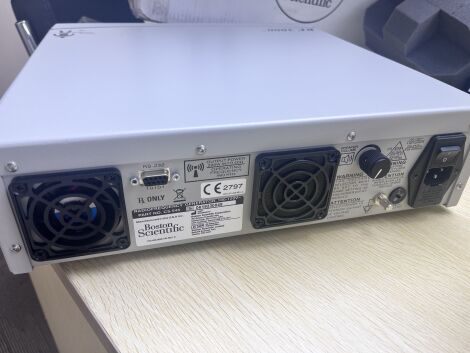
A status-verification guide for clinics and buyers, current as of September 2026. It reports no discontinuation or support status that has not been verified from a dated source, and it gives no clinical or legal advice.
The question is asked constantly and answered carelessly. A platform can be unavailable, unsupported, withdrawn in one market and supported in another ¡ª often at the same time. So the useful answer is not a single word but a method: establish the status that matters to you, from sources that can be dated, and record when you checked.
What this page can confirm today
What can be confirmed without a manufacturer statement or a regulatory record in hand is limited, and it is worth being precise about the limits. The product family is real, has been sold in multiple markets over a long period, and appears in the secondary market. Beyond that, statements about whether a specific model is discontinued, withdrawn, or still supported depend on the market, on the model and revision, and on who is being asked.
This page therefore does not assert a discontinuation status. What it provides is the verification path, and the record-keeping that makes the answer defensible when a clinic buys, sells or continues to run the equipment.
How to verify current status yourself
Manufacturer statements
The manufacturer’s current product information is the first source: whether the model still appears in current catalogues, whether a successor product is named, and whether any end-of-life or last-time-buy notices are published. Where a notice exists, save it, note the date, and record the model and revision it applies to.
Regulatory registration lookups
Registration and clearance records show whether a device has an active authorisation in a market and, sometimes, when that status changed. These records are market-specific: an authorisation lapsing in one country says nothing directly about another, and a change on a regulator’s site is not the same event as a commercial discontinuation. Record the database, the date you searched, and the exact record you found.
Distributor and service notices
Distributors publish availability, substitution and end-of-support notices that the manufacturer may not publish centrally. These are useful signals rather than authorities, and they should be recorded as such ¡ª with the source and the date ¡ª rather than treated as a statement of the manufacturer’s intentions.
What status means for parts and service
| Status question | Why it matters to you | Where to establish it |
|---|---|---|
| Is the model still sold? | Affects new-unit availability and price comparability | Manufacturer catalogue; distributor stock |
| Is it still supported? | Determines access to service, parts and software updates | Manufacturer service channel; authorised service provider |
| Are consumables and accessories supplied? | A platform without accessories cannot be used regardless of console condition | Current accessory catalogue |
| Is there an end-of-support date? | Sets the horizon for your maintenance plan | Manufacturer notice; service provider confirmation |
The important distinction is between commercial availability and serviceability. A platform can be unavailable to buy new while remaining fully supported for years, and the reverse also happens: a unit is available from stock but the service pathway has narrowed to a single provider.
Where the status question comes from
Most status questions arrive at one of three moments: when a clinic is deciding whether to buy a used unit, when a service provider reports that a part is no longer stocked, or when a buyer is told by a seller that the platform is “still fully supported”. Each of those moments calls for the same evidence, and none of them is well served by a general impression gathered from forum posts.
It helps to separate the status of the device from the status of the ecosystem around it. A console can be in good condition while its consumables are being phased out, or available from stock while its software has stopped being updated. The acquisition question is therefore not “is it discontinued” but “which parts of this platform are still moving, and which have stopped”.
Buying implications
If you are buying, status determines what you are actually acquiring. A supported platform carries a service horizon; one that is approaching end of support carries a plan ¡ª how long you intend to run it, what spares you will hold, and what you will replace it with. Both can be sound purchases, but only one of them is sound without a plan.
- Ask the seller for the model and revision, not the family name.
- Establish the service pathway in your region before purchase, in writing.
- Confirm accessory and consumable availability for the configuration you intend to run.
- Record the status sources you checked, with dates, in the purchase file.
Selling implications
If you are selling, the status question decides how the unit should be described. Claims about continued support should be sourced and dated; where support status is unclear, the honest listing says so and leaves the buyer to verify. A listing that asserts ongoing manufacturer support without a source is the kind of claim that turns into a dispute after the sale, when the buyer discovers that the parts they need are not obtainable.
Questions buyers ask
Does a lapsed registration mean the device is discontinued?
Not necessarily, and not in every market. A registration status applies to one market, and it can change for reasons unrelated to the manufacturer’s product plans. Verify the manufacturer’s own statements alongside any regulatory record.
Can we keep using a device after end of support?
That is a decision for your organization, made with the risks in view: service and parts availability, software currency, and your own risk assessment. This page does not advise on continued use; it provides the questions to answer.
How often should we re-check status?
At purchase, at acceptance, and periodically during the device’s life ¡ª particularly before major service decisions or when a replacement part proves hard to obtain, which is often the first practical sign that a platform is winding down.
Establish status from dated sources, record what you checked, and plan around the answer. If you are evaluating this platform and want the documentation that travels with a unit, ask HHG for the records on a specific item, or review the current RF3000 listing. Related reading: stabilizing legacy electrosurgical units.