IABP vs Impella vs ECMO: choosing cardiac support capital
A capital-planning view written for hospital administrators, cath-lab managers, and perfusion leadership as of September 2026. It is not clinical guidance; verify device roles against current labeling and your program's protocols. Choosing between IABP,…
A capital-planning view written for hospital administrators, cath-lab managers, and perfusion leadership as of September 2026. It is not clinical guidance; verify device roles against current labeling and your program’s protocols.
Choosing between IABP, Impella, and ECMO is not a bedside decision for an administrator to make ¡ª but the capital decision belongs to you. Each platform supports a different patient population, needs different consumables and training, and carries a different total cost. This guide frames the comparison the way a program should make it: by volume, capability, consumable supply, service, and escalation pathway, not by device names alone.
Frame the decision around program needs
Before comparing platforms, answer five questions about your program. What procedures and patient populations will the service cover? How many cases per month can your team realistically support while keeping skills current? Which escalation pathways exist if a patient needs more support than the first device provides? Who will run the device ¡ª cardiologists, intensivists, perfusionists, or a mix ¡ª and what training does each platform require? How quickly can you get service, consumables, and a backup device when one is in use or in repair? Programs that skip these questions tend to buy a console and then discover the real cost is in staffing and consumables.
The three platforms at program level
Intra-aortic balloon pump (IABP)
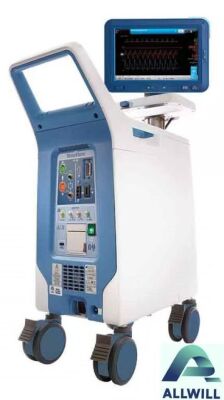
The IABP is the most established counterpulsation platform. It is a console with a single-use balloon catheter, and it is the platform most programs can stand up with the smallest training and service footprint. In many programs it is used as the lower-complexity support option: it provides counterpulsation rather than full circulatory flow, which is why programs pair it with a defined escalation pathway to higher-support devices. For capital planning, the IABP’s advantages are lower entry cost, a long service track record, and relatively simple consumables management.
Impella
Impella devices are catheter-mounted microaxial pumps that provide active flow across the aortic valve. The program questions are different from IABP: device selection depends on the access route and support level needed, per-case consumables are more expensive, and staff training is more demanding. Impella support is often used in higher-acuity settings and in combination with other platforms, so planning must include escalation logic and a reliable supply chain.
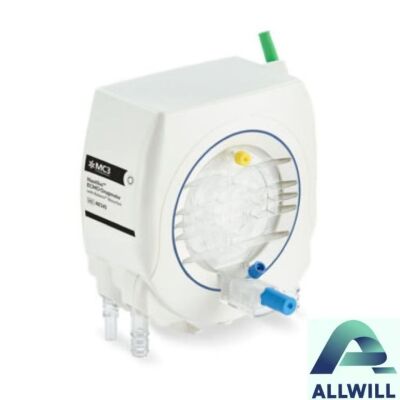
ECMO
ECMO is the highest-capability and highest-complexity option. It requires a perfusion-capable team, a circuit with pump and oxygenator consumables, anticoagulation management, and a physical footprint that most departments do not have casually. It is also the platform where recent cost analyses most consistently show the largest increases and the greatest demand on staffing. If your program is not already running a perfusion service, ECMO is a program build, not a device purchase.
What the cost literature suggests, read carefully
Recent analyses spanning 2023 to 2026 point in the same direction. A national trends study of mechanical circulatory support found that hospitalization cost was highest for ECMO and lowest for IABP. A 2025 cohort study of patients on VA-ECMO compared two unloading strategies ¡ª an Impella-based approach (ECPella) against ECMO plus IABP ¡ª and found that the Impella-based group had longer hospital stays and higher costs. Read these as planning signals from defined cohorts, not as universal prices: the Impella finding describes one unloading strategy inside a VA-ECMO population, not a general Impella-versus-IABP cost ranking. Your cost model must use your own volumes, contracts, and staffing.
Program cost structure at a glance
| Cost layer | IABP | Impella | ECMO |
|---|---|---|---|
| Capital/console | Lower; console plus cart | Console/controller plus inventory of catheter devices | Highest; console, pump, oxygenator circuits, cart |
| Per-case consumables | Balloon catheter and disposables | Catheter-based pump devices, higher unit cost | Circuit, oxygenator, cannulae, anticoagulation supplies |
| Staffing and training | Moderate | Higher | Highest (perfusion-type team) |
| Space and infrastructure | Standard OR/cath-lab space | Standard space plus storage | Dedicated space, alarms, backup planning |
| Service and consumable risk | Long service track record | Supply-chain and training dependent | Highest complexity and dependence |
Program readiness: what each platform demands
Beyond purchase price, the platforms differ in what they ask of your program. Work through these readiness dimensions before comparing quotes, because a platform you cannot staff or service will cost more than the one you can.
| Readiness dimension | IABP | Impella | ECMO |
|---|---|---|---|
| Who operates it | Cath-lab/ICU staff with console training | Trained physicians/operators per access route | Perfusion-capable team |
| Training depth | Console-based; moderate | Device- and access-specific; higher | Perfusion discipline; highest |
| Consumables holding | Catheter sizes and consoles; manageable | Device inventory by support level | Circuit stock, anticoagulation and backup components |
| Escalation pathway | Bridges to higher support | Planned step-up logic | Regional ECMO network or referral plan |
| 24/7 readiness | Achievable in most programs | Depends on staffing model | Requires roster and backup plan |
| Service support | Mature; many providers | Regional support and contracts | Most demanding; OEM or specialist |
Buying used capital across the three platforms
If a used console enters your plan, the same verification rules apply across all three families: match the serial, confirm the console’s service and battery evidence, check recall and field-action status for the specific model, verify which single-use devices are included and their expiry, and confirm that local service can actually support the platform. For IABP, battery evidence is the highest-risk item (the AC3 Optimus family has a worldwide Class 1 battery recall open since October 2022). For Impella and ECMO, the console is only part of the program ¡ª the real question is whether your supply contract and service plan can support the device family at the volume you need.
The used-market path also differs by platform. Used IABP consoles are relatively common and the acceptance questions are well defined: console serial, battery load-test evidence, catheter stock, and recall status. Impella and ECMO consoles move less often, and when they do, the documentation pack matters more than the console: the controller is worthless without an approved supply relationship, a service plan, and consumables that match the model. If a seller cannot document the device family’s supply chain, the low console price is not a discount ¡ª it is a deferred cost.
A decision checklist for your next capital review
- Define the patient and procedure mix the service must cover.
- Estimate realistic monthly volume; avoid planning around best-case numbers.
- Confirm who operates each platform and what training is already funded.
- Price the consumables contract for the first year, not just the console.
- Document the escalation pathway between IABP, Impella, and ECMO in your service.
- Verify used-console records, recall status, and regional service support before purchase.
Questions program leaders ask
Should we start with IABP and grow into ECMO later?
Many programs do start with a lower-complexity platform and build capability over time. The honest answer depends on your patient mix, perfusion capability, and referral relationships ¡ª not on the device brochure.
Is one platform “better” than the others?
No. They serve different support roles and are sometimes used together. “Better” only exists relative to a specific patient population and a program’s ability to run the device safely.
Can used consoles close the cost gap?
They can reduce the capital entry cost, but they do not reduce consumable, training, or service costs. Build your model around the recurring costs and treat the console as one line item.
Bring the program profile, not a wish list, to your capital conversation: patient mix, monthly volume, who will operate the device, and your existing escalation pathway. Send HHG that profile if you want help mapping which used cardiac-support platforms could fit your program, or browse current cardiac listings to see what is available today. If the decision includes the perfusion side of the program, HHG’s cardiac and perfusion equipment sourcing guide covers the components behind the console choice.